
Ukrainian forces launched a mass drone attack on Russia’s Rostov Oblast overnight on August 29, striking logistics warehouses belonging to e-commerce giants Ozon and DNS along with multiple other commercial sites in coordinated strikes that injured seven people and sparked fires across the region.
The wide-ranging attack targeted facilities across the southern Russian region, hitting the major city of Rostov-on-Don and the towns of Aksay, Bagayev, and Leninskoye. Explosions were heard throughout the night as Ukrainian drones penetrated deep into Russian territory, marking one of the most concentrated strikes on commercial infrastructure in recent weeks.
Ozon, one of Russia’s largest online retailers, confirmed that one of its logistics facilities in Rostov-on-Don was hit by a drone, causing a fire that was quickly extinguished by emergency responders. The company said it temporarily suspended operations at the facility to allow emergency services to inspect the area and ensure it was completely safe. All employees had been evacuated in advance, according to the company’s statement.
In the town of Aksay, a warehouse belonging to DNS, a major Russian electronics and appliance retailer, was set ablaze. The fire continued to burn as emergency services worked to contain it and evacuate personnel. Nearby in the village of Leninskoye, a warehouse belonging to Russian supermarket chain Chizhik was also struck, according to Telegram channel Exilenova Plus, which documented the overnight attacks.
Rostov Oblast Governor Yuri Slyusar confirmed that drone debris was found in multiple districts across the region. The city of Rostov-on-Don and the Aksay, Bagayev, and Neklinovsky districts were all targeted in what Slyusar described as a “massive” attack. Seven people were injured across the region, the governor said, with emergency services responding to multiple sites simultaneously.
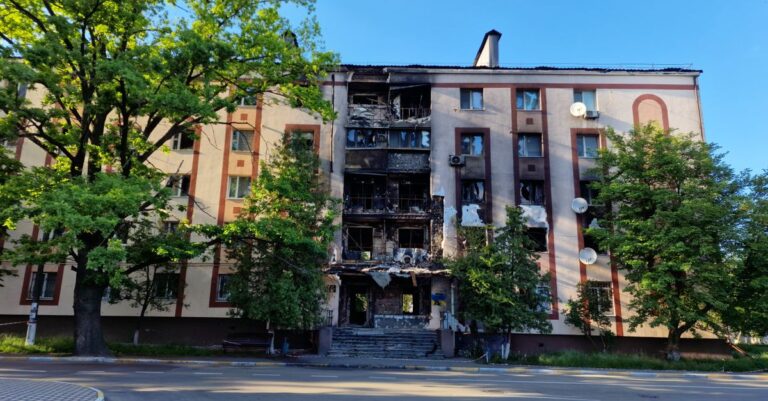
In the Proletarsky district of Rostov-on-Don, debris from a falling drone damaged two apartment buildings, prompting emergency evacuations of residents. In the Bagayev district, the shockwave from the strikes shattered windows in several houses. Emergency services continued working at multiple sites throughout the morning as the full scale of the damage became clear.
Intensifying Commercial Campaign
The strikes on Rostov Oblast are part of an intensifying Ukrainian campaign targeting Russian commercial and logistics infrastructure. Over the past week, Ukrainian forces have systematically attacked warehouses belonging to major Russian retailers, aiming to disrupt supply chains and impose direct economic costs on businesses operating deep inside Russia.
On August 27, Ozon reported attacks on its warehouses in Ufa and Orenburg in the Ural Mountains, hundreds of kilometers from the Ukrainian border. Two days earlier, on August 26, a Wildberries warehouse was targeted in Tambov Oblast. Wildberries, Russia’s largest online retailer, has drawn Ukrainian targeting after reports that the platform listed military equipment including drone components and body armor on its commercial website.
The commercial targeting campaign runs parallel to Ukraine’s broader long-range strike strategy against Russian energy and military infrastructure. On August 28, Ukrainian drones struck the Yaroslavl oil refinery, one of Russia’s largest oil processing facilities. Attacks were also reported near Moscow and in the Engels area, where Russia’s strategic bomber aircraft are based. The General Staff confirmed the strikes as part of Ukraine’s expanding deep-operation doctrine.
President Volodymyr Zelenskyy on August 29 called on the military to triple its daily long-range strikes on Russia, setting a target of 1,000 drone attacks per day. The average currently stands at over 300 long-range strikes daily, meaning the new target would more than triple the current operational tempo. The Rostov Oblast attacks appear to be an early manifestation of this intensified campaign.
Psychological Pressure on Russian Cities
Rostov Oblast, which shares a direct border with Ukraine, has become a frequent target due to its proximity to the frontline and its role as a logistics hub for Russian military operations in southern Ukraine. The region also hosts the headquarters of Russia’s Southern Military District in Rostov-on-Don, making it a strategically significant target beyond the commercial damage inflicted on retailers.
The psychological impact of sustained strikes on a major Russian city of over one million people continues to challenge the Kremlin’s narrative that the war remains contained far from Russian population centers. With multiple warehouses burning and residential buildings damaged, residents of Rostov-on-Don face a reality that has increasingly resembled life in cities closer to the Ukrainian front.


discussion